ROOTED HERE
The history of Fargo
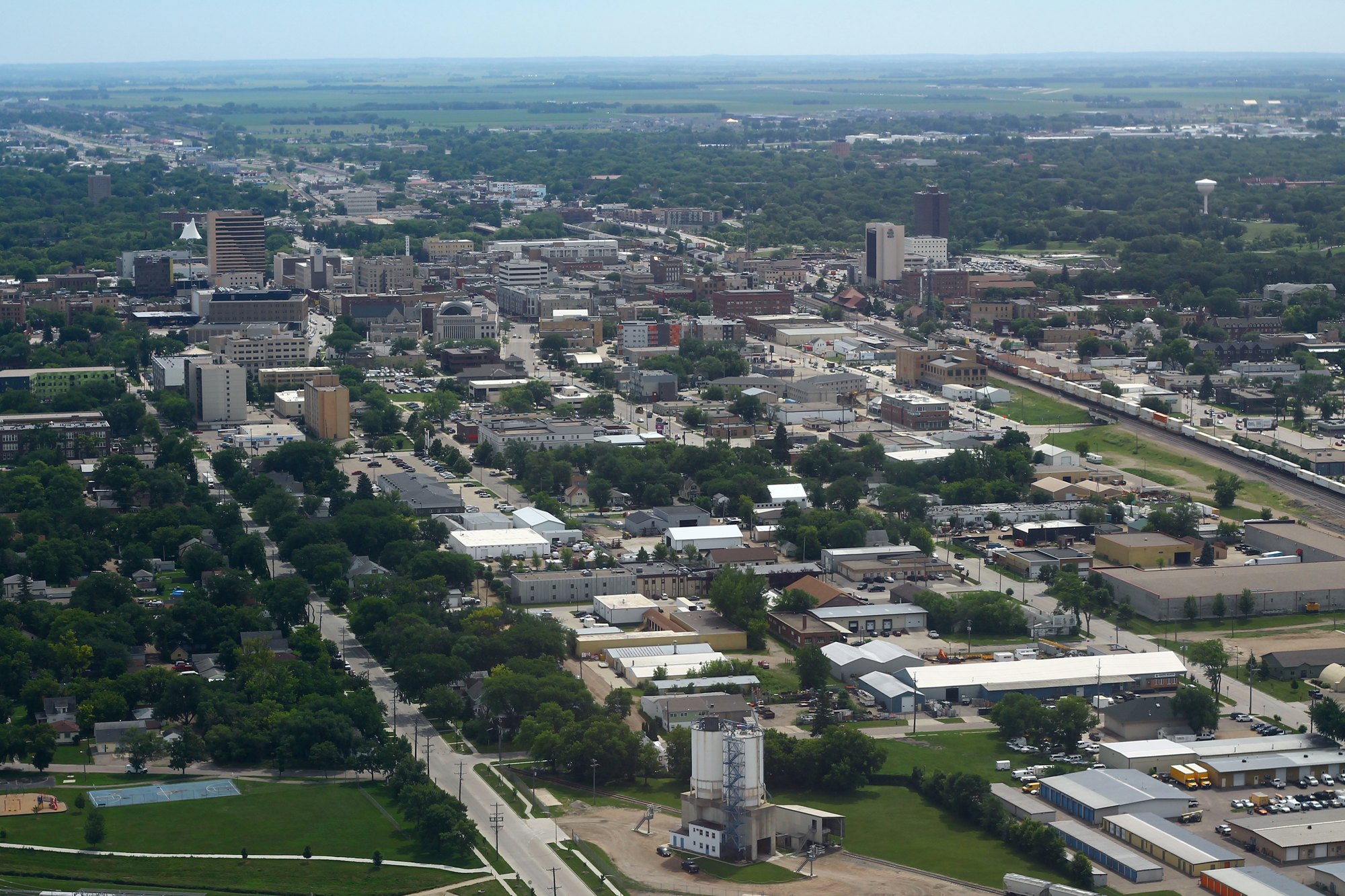
Fargo grew on the Red River and remains a regional cultural and commercial center. Downtown, the Fargo Theatre, the Plains Art Museum and North Dakota State University offer different starting points.
People who shaped Fargo
These milestones are an introduction, not a complete local history. Follow the linked city and museum sources to explore the people and places behind them.Read the local historical account.
Watch the city’s history

FROM THE ARCHIVES
History of Fargo
Fargo Parks presents an introduction to the city's past.
Watch on YouTube ↗
FROM THE ARCHIVES
The Fargo Theatre at 100
Prairie Public’s Prairie Pulse talks with executive director Emily Beck about the Fargo Theatre’s centennial and its role in Fargo-Moorhead.
Watch on YouTube ↗Famous people born in Fargo
See all 48 famous people


- 1871
Railroad meets the Red River
Settlers established claims where the Northern Pacific Railroad would cross the Red River. Fargo took its name from railroad director and express-company founder William G. Fargo.
City of Fargo ↗ - 1875
City incorporation
Fargo incorporated on January 5, 1875. Municipal government developed as the new railroad settlement grew into a center serving the surrounding agricultural country.
City of Fargo ↗ - 1876–1892
A fast-growing prairie community
The city's population rose from about six hundred in 1876 to more than eight thousand in 1892. Fertile Red River Valley farmland attracted newcomers and business activity.
City of Fargo ↗ - 1890
An agricultural college for Fargo
North Dakota’s governor approved the law establishing the North Dakota Agricultural College and Experiment Station at Fargo on March 8, 1890. The college opened with 123 students enrolled in January 1892.
NDSU Libraries: Fargo History Project ↗ - 1893
The downtown fire
On June 7, fire spread from Front Street, now Main Avenue, through downtown. Strong winds helped destroy more than thirty-one blocks of the largely wooden commercial district.
City of Fargo ↗ - 1893–1894
Rebuilding in substantial form
Within a year, builders had constructed 246 new buildings. The reconstruction brought more substantial architecture, and surviving post-fire buildings remain central to downtown's historic character.
City of Fargo ↗ - 1926
The Fargo Theatre
The Fargo Theatre was built in 1926 as a cinema and vaudeville theatre. Restored and run as a nonprofit, it now shows independent and foreign films, hosts live events and is on the National Register of Historic Places.
Fargo Theatre ↗ - 1957
The Fargo tornado
An F5 tornado struck Fargo on the evening of June 20, cutting a path nine miles long and up to 700 feet wide. Dr. Ted Fujita’s study of the storm introduced tornado terminology still in use today.
National Weather Service Grand Forks: Fargo 1957 F5 Tornado ↗ - 1960
North Dakota State University
On December 8, 1960, the North Dakota Agricultural College became North Dakota State University. The change ended a four-decade effort for a name reflecting its multidisciplinary colleges.
NDSU Libraries: Fargo History Project ↗ - 2009
A record Red River crest
The Red River at Fargo reached a record stage of 40.84 feet, surpassing the 1997 record of 39.72 feet. The river stayed above flood stage in Fargo and Moorhead for nearly two months.
U.S. Geological Survey: 2009 spring floods ↗
See the history for yourself.
Check current opening hours and visitor information before you go: Plains Art Museum.
For local services and public information, the local government website is a starting point. For historical research, consult local libraries, archives and museums and check collection-specific image permissions.
Selected milestones from the linked historical sources. This is an introduction, not a complete account of the city’s history.